

A Lock On the Door
On watching 'The Housemaid' and 'All Her Fault' in fascist America

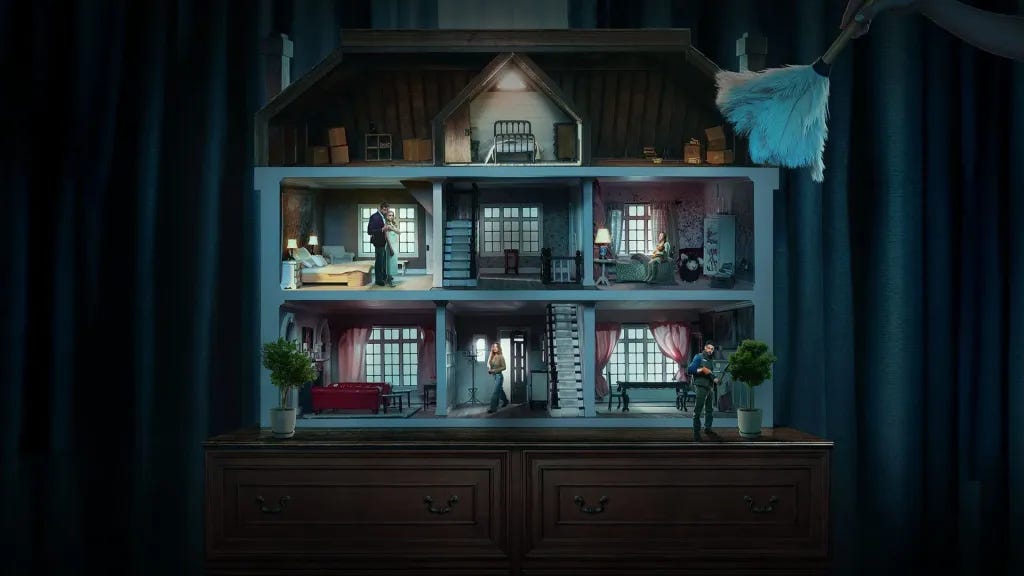
Two weeks ago, Donald Trump threatened to invoke the Insurrection Act if Minnesota’s political leaders didn’t “stop the professional agitators and insurrectionists from attacking the Patriots of ICE.” Trump’s announcement came in response to protests in Minneapolis over the killing of Renée Nicole Good, but also in the weeks after his administration had already taken military action without congressional approval, abducting Nicolás Maduro from Venezuela. Last Thursday J.D. Vance walked back the threat of the act, which allows the government to forcibly “suppress the rebellion,” yet the image conjured hung in the air all the same. On Saturday, border patrol agents in Minneapolis killed Alex Pretti while he was trying to film them, and the White House defended it by claiming Pretti was intending a “massacre.”
As the administration plays its long game of justifying fascist violence by blaming the victims of said violence, a whole lot of Americans have been watching a strangely relevant movie called The Housemaid. Trump clearly doesn’t need the Insurrection Act to do what he wants, but his invocation of it is a storytelling tactic that is also used by the villain in Paul Feig’s new thriller — an abuser who insists a future emergency is imminent in order to rationalize brutal punishment in the present. In his eyes, even imprisonment can be called an act of mercy.
The Housemaid is based on a very popular 2022 book of the same name by Freida McFadden, but its success has been a bit of surprise given that it stars Sydney Sweeney, who was coming off a series of flops (including that infamous jeans commercial) and it was released against two all-time blockbusters this holiday season in Zootopia 2 and Avatar: Fire and Ash. Nevertheless the film has grossed $300 million worldwide (with a sequel on its way) and has surpassed Bridesmaids as Feig’s most popular film ever. Amidst all the hoopla around Marty Supreme’s box office might, The Housemaid has made more money than that Oscar nominated film, on a budget that was reportedly half the size.
Feig’s campy movie may have found an audience because, unlike most of its competition, it very clearly centers straight white women. The plot revolves around Sweeney’s Millie Calloway, a recently paroled drifter sleeping in her car, who stumbles into a gig as the housekeeper for the very wealthy Nina Winchester (Amanda Seyfried) and her mysterious husband Andrew (Brandon Sklenar). Twists ensue and things in the home are revealed to be much darker than they seem. It’s been described as an “erotic thriller” and I guess it does fit that bill, if you define the genre as film theorist Linda Ruth Williams has: “noirish stories of sexual intrigue incorporating some form of criminality or duplicity, often as the flimsy framework for onscreen softcore sex.” But the narrative is less Basic Instinct or Fatal Attraction, and more in the lineage of Rebecca and Jane Eyre.
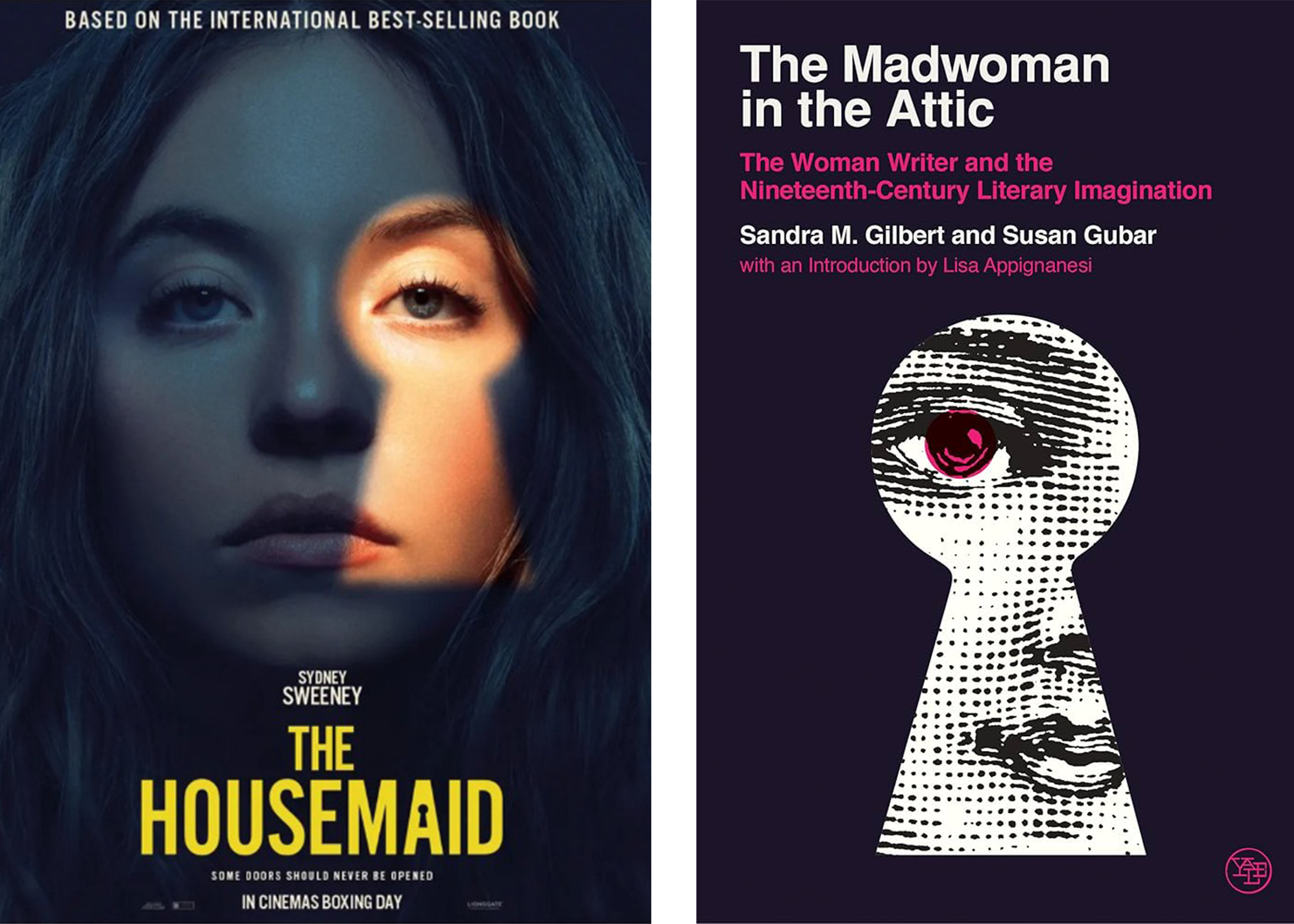
In 1979, Sandra M. Gilbert and Susan Gubar wrote The Madwoman in the Attic: The Woman Writer and the Nineteenth-Century Literary, in which they argued that (white) novelists like Charlotte Brontë wrote women who were either “angels” or “monsters,” both trapped in “the architecture of a patriarchal society, and imagining, dreaming, or actually devising escape routes.” In Jane Eyre, the wealthy Mr. Rochester — Jane’s new employer — is hiding his wife Bertha in a locked attic because she is supposedly “mad.” But as Gilbert and Gubar describe her, she is more than just Rochester’s secret wife: she is the orphaned Jane’s “own secret self.” Once Jane uncovers the truth about the attic, her boss justifies his horrific actions by pointing to the unpredictable temperament of his wife and her need to be controlled. And though the novel ends with Bertha burning down the house, a seeming affirmation of Rochester’s viewpoint, the scholars argue that she is in fact acting as an “avatar of Jane,” expressing a shared desire to break free.
In The Housemaid the mirroring between the two women of the estate is taken a step further (*spoiler alert*). Though Millie is at first seduced by Andrew’s performance of goodness, blaming his wife for all the troubles in the home, she eventually learns the truth when she becomes his lover and is locked away in an attic herself. Meanwhile, it’s revealed that Nina has orchestrated the whole situation as a means to escape her manipulative husband, hiring the younger, similar-looking housekeeper with the hope that she would replace her as his target. The plan works for Nina, but a moment of guilt while on the run with her daughter pushes her to come back for Millie. In the end the two blonde-haired white women — neither angels nor monsters — form an unlikely alliance against Andrew. They are helped in this by a hot grounds keeper (an obligatory “good” man) but largely emerge as their own saviors.
At a time when the myth of American exceptionalism is being repeatedly exposed as the cause of violence worldwide, maybe this yarn offers some comfort to white viewers who want to imagine that all they have to do to keep their lifestyles is help take down “bad” men like Andrew. That certainly seems to be the perspective of Feig, a man who says he makes movies for women yet has built a career mainly focused on certain women. Part of what draws thin, able-bodied Millie deep into Nina’s even whiter world after all is the promise of wealth and a fairy tale partnership. The man of the house is shown to be a fraud, but the film does not end with Millie and Nina building a new life together, rejecting heteronormativity, or aligning to takedown capitalism.
Nina does inherit Andrew’s cash though and gives Millie a check for $100,000 to start anew. In the last scene we see Millie sitting in yet another pristine mansion, interviewing for a new housekeeper job, ready to help another rich white woman escape a dangerous husband. These women certainly deserve to be free of harm. Yet these final moments, as Millie sits armed with money and an understanding of her power within patriarchy, feel almost Marvel-like in how they set her up for the sequel. She is our avenging hero.
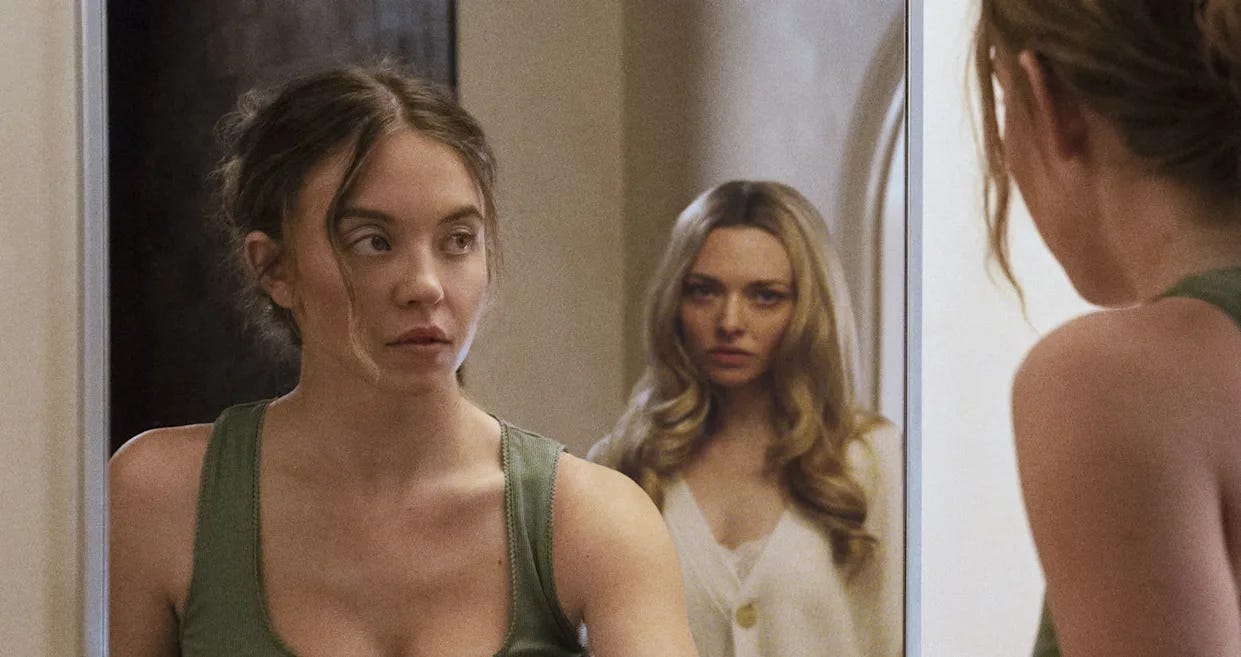
While The Housemaid has been raking it in at cinemas, a miniseries about two white women pushing against the confines of patriarchy has had the biggest launch of any Peacock show ever since it was released in November. All Her Fault is similarly based on a popular book, by Andrea Mara, and was brought to TV by Megan Gallagher. It stars Sarah Snook, who was recently nominated for a Golden Globe for her performance as Marissa Irvine, a wealthy mom whose child, Milo, is abducted after she makes a mistake in arranging childcare. Her error involves another wealthy mother and new friend named Jenny (Dakota Fanning) who, distracted by her busy career and the stress of managing her household, hires Carrie (Sophia Lillis), a white nanny that ends up being the main suspect in the disappearance. The two mothers are blamed for allowing this catastrophe to happen.
Meanwhile, in both households their husbands are largely absent from the day-to-day child-rearing duties. These white men avoid confronting festering issues in their partnerships, allowing unspoken gender roles to remain unspoken. As the investigation into Milo’s disappearance deepens, their choices around parenting and partnership become more and more relevant. Through this there is both an affirmation and a surface critique of white feminism in the show, particularly the “women still can’t have it all” kind that was popular in the 2010s. Marissa’s working class nanny Ana Garcia (Kartiah Vergara), who makes it possible for her to run her lucrative business, is shown struggling to share pertinent information with her about the kidnapping case — clearly because she fears losing her job or punishment from the police. Yet she is also not a major part of the story, and doesn’t get the character depth of Marissa, Jenny, or even Carrie.
Compared to The Housemaid, the series takes more specific aim at the circular logic of patriarchal fatherhood (*spoiler alert*). Here the primary villain, Marissa’s husband Peter (Jake Lacy), is not only obsessed with control, but is shown to associate his value as a man with taking care of and protecting others. He pines for this so badly that he would resort to anything for the high of being needed — including putting his own loved ones in danger.
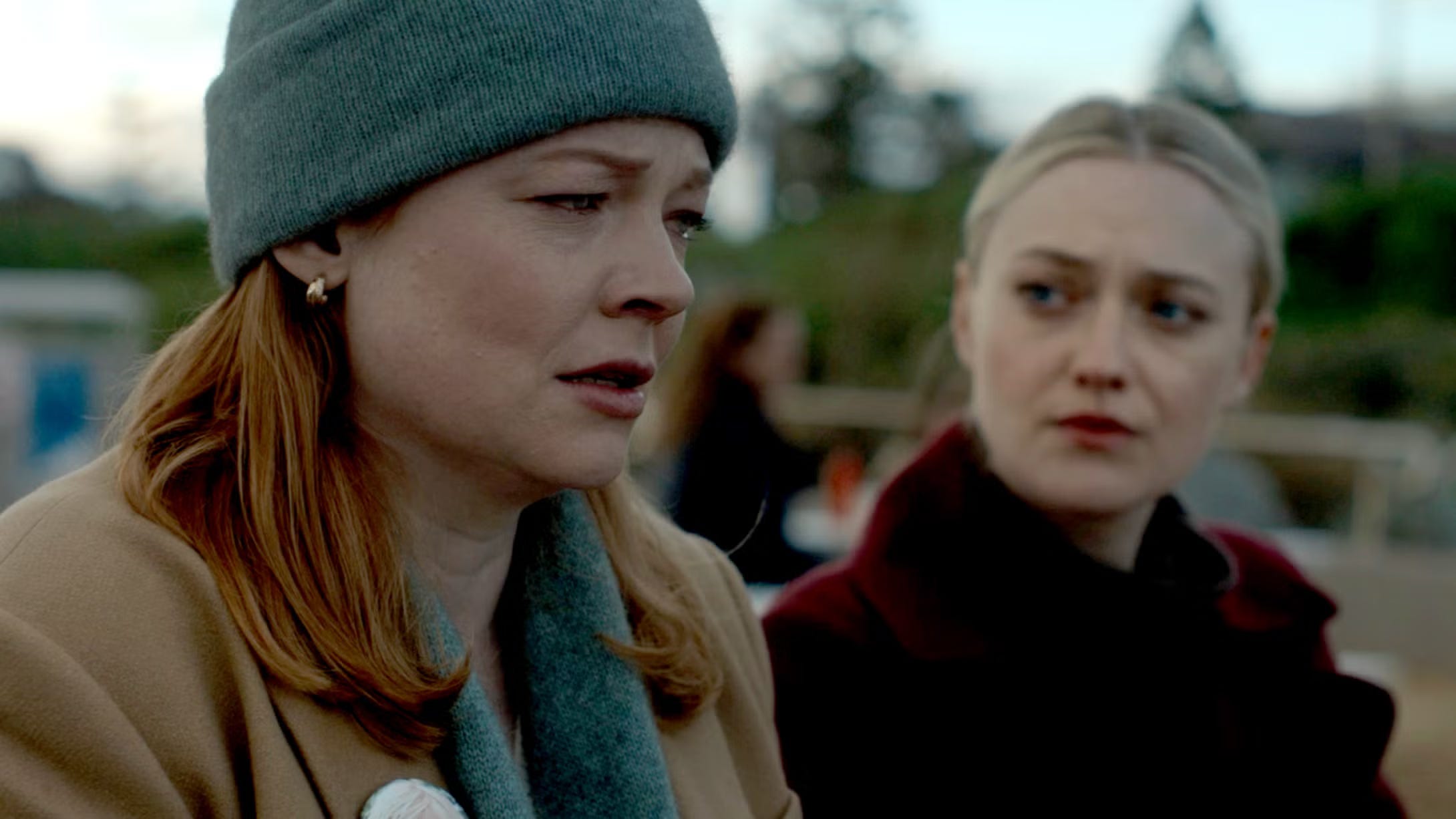
Peter ultimately admits to a horrific series of lies and manipulations, across many years, that he claims needed to happen to keep his family protected. For instance, he has been withholding medical information from his disabled brother because he decided it was better for him to painfully try to walk than be pain-free in a wheelchair. When Peter receives a phone call from someone demanding a ransom for Milo, he does not tell his wife or Detective Alcaras (Michael Peña) - he will handle it on his own. And in a climactic confrontation with a desperate Carrie, Jenny’s former nanny, Peter shoots her when it becomes clear she might reveal his biggest secret of all: that Milo is in fact her child which he kidnapped years ago. Marissa’s best friend and business partner Colin (Jay Ellis), the show’s only Black character, is also killed in this fracas. While the series does not offer anything close to a legible analysis of power, it provides this example of how far patriarchal conditioning can go in the lives of men, particularly able-bodied white ones with the means to dominate.
The paternalistic logic of Andrew and Peter, a version of “father knows best,” is the core of the Trump doctrine too. The President and his friends argue that entire populaces are unable to make their own decisions without his government’s help or that the shooting of a protestor was unavoidable because of the protestor’s “bad” behavior. Even as the state carries out abductions and murders in broad daylight, it will not take accountability for its role in fostering the instability it claims it must now address through brute force. The only way to protect us from the supposed lawless chaos of the masses is to embrace the lawless policing of those in power — never mind that their actions are what started it all.
The creation of problems that can only be solved through domination is essential to keeping patriarchal systems alive. This is the myth powering our insistence on borders, the military, police, prison, and even fatherhood itself. According to their captors, women like Bertha have to be locked in the attic, not only for their own good but to protect innocent women like Jane Eyre from harm.
These recent stories rebuke that philosophy, if only partially. Once Marissa learns the truth about her husband, she is faced with a decision: reveal Peter’s crime and risk losing her child, or find a way to rid him from her life without others ever knowing the truth. She chooses the latter, with Jenny’s help, killing him and keeping Milo as her own. The assumption made though is that the child is better off with her than with Carrie’s working class, dysfunctional family. Even the “good” cop Alvaras, who figures out what really happened, allows this deception to occur because he has made, as a parent, a moral compromise of his own.
White women are again presented as the rebel heroes, the ones who game the system for power in order to protect the rest of us. In doing so the show retains a tenet of the Trump-ian worldview: that whiteness is special and white womanhood something worth going to war over. Though these women are still only relatively “safe” if they adhere to binary gender norms — with ideals of ownership and domination — they also have paths open that others do not. Jane Eyre knew this, even as she decided to be with Rochester and bury the memory of Bertha’s defiant act. She confesses in Brontë’s novel: “in my secret soul I knew that his great kindness to me was balanced by unjust severity to many others.”
Yet Bertha is not only described in Jane Eyre as a “strange wild animal” but as a dark-haired person from colonized Jamaica, “discolored” and with lesser “intellect,” whose family’s wealth came from the slave trade. Whether or not she is mixed race, she is certainly made into more of a “monster” — and Jane more an “angel” — by descriptions that allude to skin color. As Tyrese Coleman has observed about reading Jane Eyre as a Black woman, “the privilege of escapism” in the novel “is not allowed” for everyone. In fact, one might reasonably conclude from descriptions like “what it was, whether beast or human being, one could not at first sight tell,” that Bertha is not a woman at all.
This week Trump and his administration have shown signs of retreating from the purposely incendiary claims they’ve made about Renée Good and Alex Pretti, including that they were terrorists. We can credit the organizing and outrage on the ground in Minneapolis and elsewhere in the country, which has pushed Democrats and some Republicans in Congress to respond. And yet, as others have noted, the fact that these latest victims were white is surely also a factor. Trump has said as much, claiming now it’s a real shame Good was “radicalized,” since she has “tremendous” parents. And most of the politicians in an uproar today were not pushed to speak so boldly before, despite the numerous people of color who have been murdered by ICE.
Stirring the pot further, David Marcus wrote a Fox News op-ed after Good’s murder lamenting the rise of “organized gangs of wine moms” who he said were interfering with law enforcement. Extending a misogynistic history of blaming mothers for all kinds of social ills, Marcus describes this “gang” as filled with “self-important white women.” This led to warranted anger online and think pieces defending mothers like Good (and wine-drinkers alike). It is telling though that the same acknowledgment or defense has not always been given to Black working class mothers who have been killed and demeaned for their activism, all while remaining the most likely to organize for the safety of all of us. It’s also been overlooked in many conversations that Good was a queer parent too. In some ways the “wine moms” insult then feels like a response to the “trad wife” joke — a battle over the appropriate behavior of white women with means. Which feels like a useful place to keep the conversation for those who want to put immigrants in cages and disappear trans people.
Posters for The Housemaid feature the tagline “some doors are better left unopened,” which now sounds oddly appropriate. Though both the film and All Her Fault end with women supporting women to bring down men, they still leave much locked away and out of sight. By ignoring race and sexuality within the “madwoman” trope or downplaying it in a discussion of how “women still can’t have it all,” this type of media maintains a fantasy of straight cisgender white American-ness.
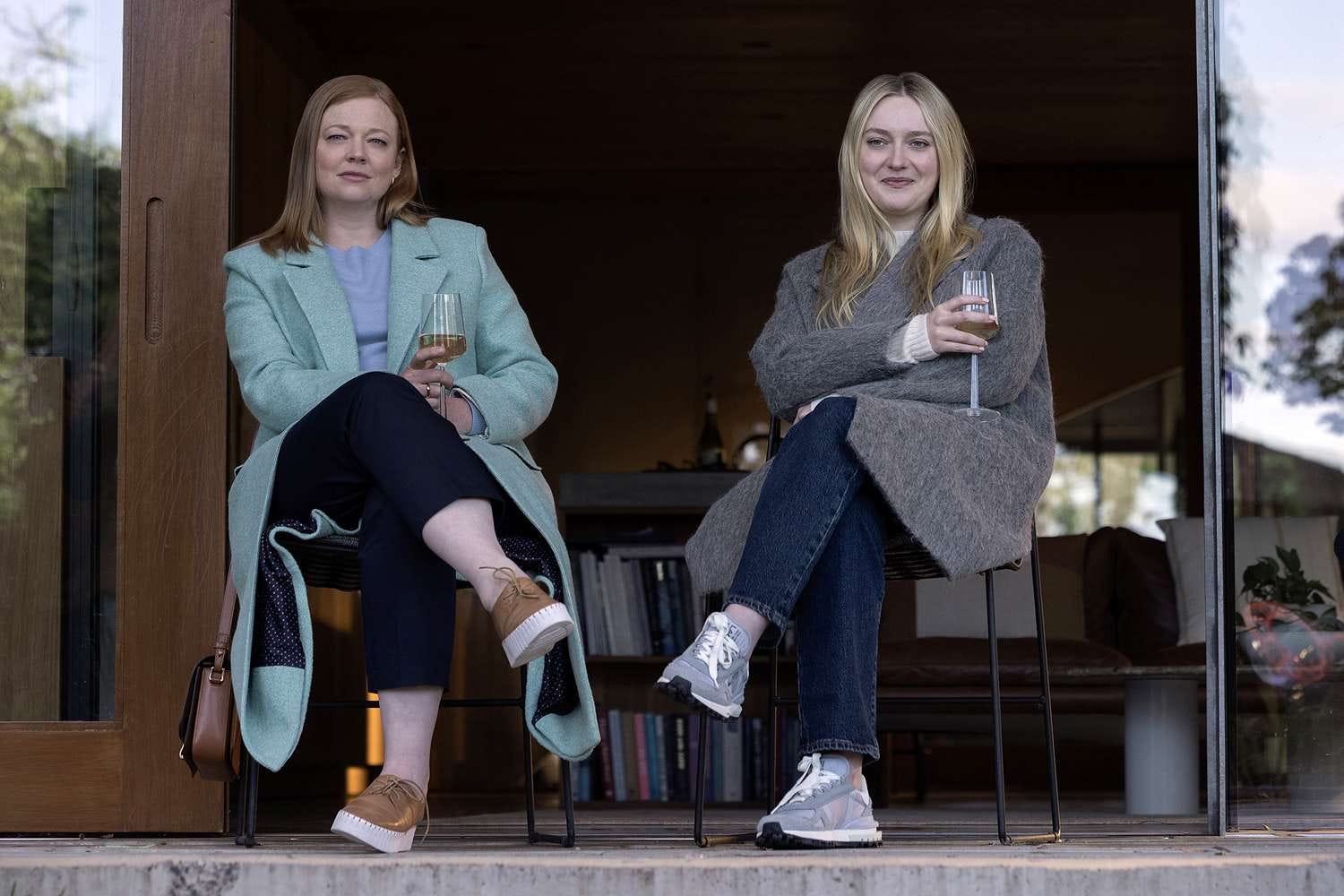
The final scene of All Her Fault finds Marissa and Jenny (sipping wine) in the latter’s backyard, watching their kids play together, with a beautiful home towering in the background. Both presumably are single now — having escaped patriarchal households with the help of that “good cop” — making enough money to reinvent themselves. They are supporting each other not as partners, but as rich friends who share deep secrets.
Like in The Housemaid, I kept waiting for a more dramatic rejection of the thing that has brought so much pain and misery into their lives and those less fortunate around them; the possibility of a different future for all living under the terror of this oppressive system. But rather than the house burning down, we are left to marvel at the comfort of the elite few who are protected inside it.
What is being imagined on screen is a harrowing struggle ending with a return to a kind of normal; safety within the world as it is. The wide appeal of this appeasement is understandable, as it long has been. Yet what continues to be required of us inside empire is something far more radical, unsettling, and visionary.